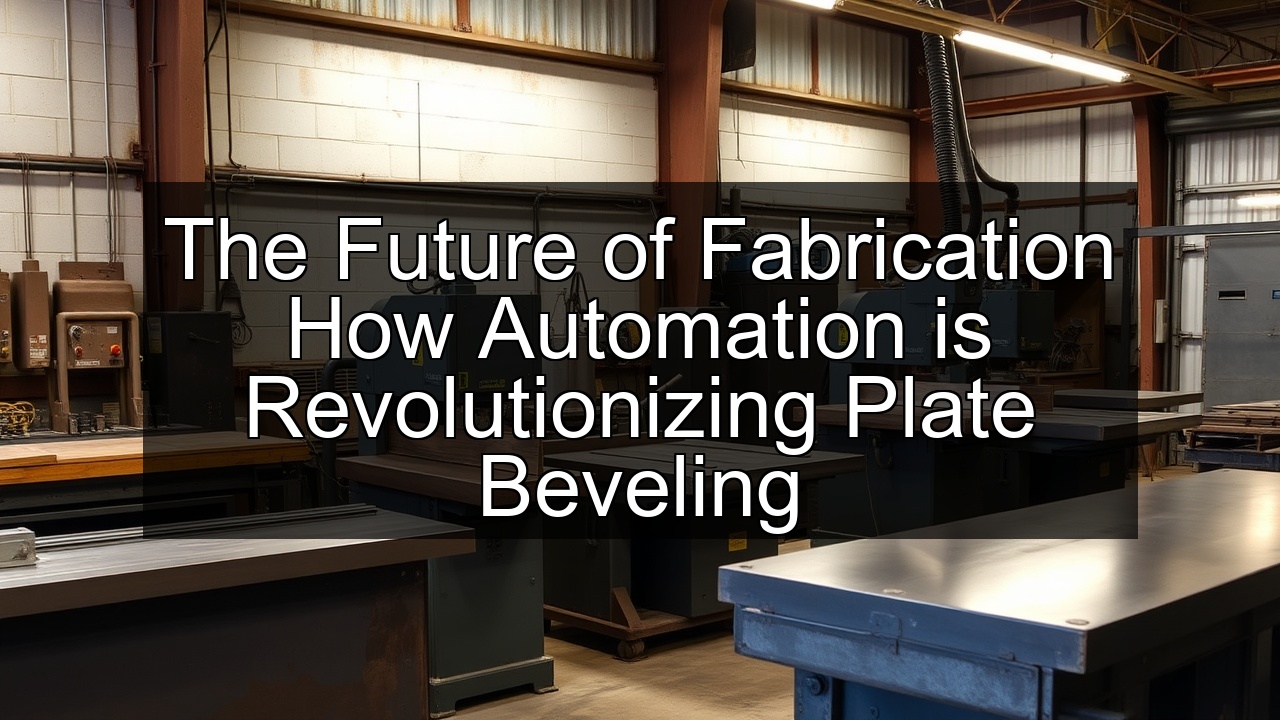
The Future of Fabrication How Automation is Revolutionizing Plate Beveling
The Evolution of Plate Beveling Machines
A Brief History of Plate Beveling
Plate beveling has roots that trace back to ancient metalworking techniques. Early craftsmen used rudimentary hand tools to achieve bevels on metal edges, primarily for aesthetic purposes or to facilitate fitting and assembly. As industries evolved, so did the demand for precision and efficiency. The introduction of powered machinery transformed manual processes into automated systems, allowing for greater consistency and accuracy. By the mid-20th century, the advent of electrical and hydraulic systems further revolutionized plate beveling. These innovations laid the groundwork for modern plate industrial beveling machines beveling machines, which now integrate advanced technologies to enhance operation and output.
Key Innovations in Machine Tools
Innovations in machine tools have played a pivotal role in the development of plate beveling. Early machines relied heavily on mechanical components, but advancements in electronics have enabled sophisticated controls and programming. CNC (Computer Numerical Control) technology now dominates the landscape of plate beveling machines. This technology allows operators to input specific bevel angles and dimensions, ensuring high precision across multiple units. Additionally, the integration of laser and plasma cutting technologies into beveling machines has improved the efficiency of the process, enabling faster production times while maintaining the quality of the finished product. These innovations reflect a broader trend in metalworking, where automation and precision are paramount.
The Role of Automation in Metalworking
Automation has revolutionized the metalworking industry, particularly in plate beveling. Automated plate bevelers reduce the need for manual intervention, increasing consistency and reducing human error. These machines are designed to operate continuously, optimizing production schedules and minimizing downtime. With improved software and robotics, automated systems can adapt to varying plate sizes and materials, offering flexibility that manual methods simply cannot match. Furthermore, automation enhances worker safety by minimizing direct human contact with potentially hazardous machinery. As industries look to streamline operations and improve output, the adoption of automated plate beveling machines becomes essential.
Types of Plate Beveling Machines
Heavy Duty Beveling Machines
Heavy-duty beveling machines are designed for robust applications, often used in shipbuilding and large-scale construction projects. These machines handle thick plates and high volumes, delivering powerful performance without sacrificing precision. Equipped with advanced cutting tools, heavy-duty bevelers can achieve various bevel angles and profiles, making them versatile for multiple applications. Their construction typically includes durable components capable of withstanding the rigors of industrial environments. Users benefit from increased throughput and reduced processing times, as these machines can handle the demands of continuous operation. Heavy-duty beveling machines are indispensable for industries requiring reliable and efficient metalworking solutions.
High Speed Plate Beveling Machines
High-speed plate beveling machines cater to industries where time is of the essence. These machines excel in environments that require rapid production, such as automotive manufacturing and metal fabrication shops. By utilizing advanced motor technology and optimized cutting paths, high-speed bevelers significantly reduce the time taken to process each plate. This efficiency comes without compromising the quality of the bevel, ensuring that welds are clean and precise. Operators appreciate the ease of use, as many high-speed machines come equipped with user-friendly interfaces that streamline the setup and operation processes. The ability to maintain high output levels makes these machines a popular choice for businesses looking to enhance productivity.
Precision Plate Beveling Machines
Precision plate beveling machines focus on achieving exact specifications for intricate projects. Industries such as aerospace and high-end manufacturing often require bevels that meet stringent tolerances. These machines utilize advanced technology such as CNC and laser guidance systems to produce bevels with remarkable accuracy. Precision bevelers are essential when dealing with materials that require tight fitting, as they ensure that welds are flawless and the overall integrity of the assembly remains intact. The investment in precision beveling machines pays dividends in the form of reduced rework and enhanced quality control. As the demand for precision in metalworking grows, these machines become increasingly vital.
The Benefits of Automation in Plate Beveling
Increased Efficiency and Productivity
Automation in plate beveling drastically increases efficiency and productivity. Automated systems operate with minimal downtime, allowing for continuous production cycles. This capability translates into higher output rates, enabling manufacturers to meet growing demands without significantly increasing labor costs. Automated plate bevelers can process multiple plates simultaneously, which further accelerates production timelines. The ability to program specific bevel requirements into the machine means that operators can run jobs with little intervention, freeing them to focus on other tasks. As a result, businesses can scale operations efficiently while maintaining high standards of quality in their metalworking processes.
Enhanced Precision and Quality of Welds
Automated plate beveling machines offer enhanced precision that directly impacts the quality of welds. By utilizing advanced technology, these machines ensure that bevel angles are consistently accurate, which is crucial for achieving strong, reliable welds. The precision reduces gaps between metal pieces, leading to better fusion during the welding process. This accuracy minimizes the risk of defects in the final product, which can save costs associated with rework and scrap. Industries that prioritize quality, such as aerospace and automotive, find that automation delivers the reliability they need for critical applications. Enhanced precision and quality in welds foster a reputation for excellence among manufacturers.
Reduction in Labor Costs
Automation significantly reduces labor costs associated with plate beveling. As machines take over repetitive and labor-intensive tasks, companies can allocate human resources to more skilled positions. This shift not only optimizes labor costs but also enhances workforce productivity. Automated systems require fewer operators to achieve the same output levels, leading to lower operational expenses. Additionally, with reduced reliance on manual labor, companies experience fewer workplace injuries, which can further decrease costs related to insurance and safety training. The financial benefits of investing in automated plate beveling machines become evident as businesses streamline operations and improve their bottom line.
Leading Brands and Technologies in Plate Beveling
Gullco International and Their Innovations
Gullco International stands out as a leader in the plate beveling machine market, known for its innovative solutions that enhance metalworking processes. Their range of automatic plate bevelers integrates cutting-edge technology, allowing for high-speed operations without compromising precision. Gullco's commitment to quality and reliability has earned them a solid reputation among metal fabricators. Their machines often feature programmable controls that enable users to customize settings based on project requirements. By investing in Gullco's beveling solutions, manufacturers can achieve high productivity while ensuring the quality of their welds meets rigorous standards. Their innovations continue to set the benchmark for efficiency in the industry.
Exploring MPB's Advanced Bevelers
MPB, another prominent name in the plate beveling market, offers advanced beveling machines designed for versatility and performance. Their machines cater to various industries, providing solutions that meet the specific needs of fabricators. MPB's commitment to innovation is evident in their use of advanced materials and technology, which enables their machines to operate at high speeds while maintaining precision. Featuring user-friendly interfaces and robust construction, MPB's bevelers are ideal for both small workshops and large-scale operations. The brand's focus on customer satisfaction ensures that they provide ongoing support and training, helping users maximize the potential of their plate beveling machines.
Understanding SKU Variations and Their Applications
Understanding SKU variations in plate beveling machines is crucial for selecting the right equipment for specific applications. Each SKU represents a unique configuration of features, capabilities, and sizes tailored to different industrial needs. Manufacturers must consider factors such as the thickness of the plates, the types of bevels required, and the production volume when choosing a machine. Some SKUs may focus on high-speed operations, while others prioritize precision. Exploring these variations helps businesses tailor their investments in machinery for maximum efficiency and effectiveness. By selecting the appropriate SKU, fabricators can optimize their workflows and enhance the overall quality of their metalworking outputs.